

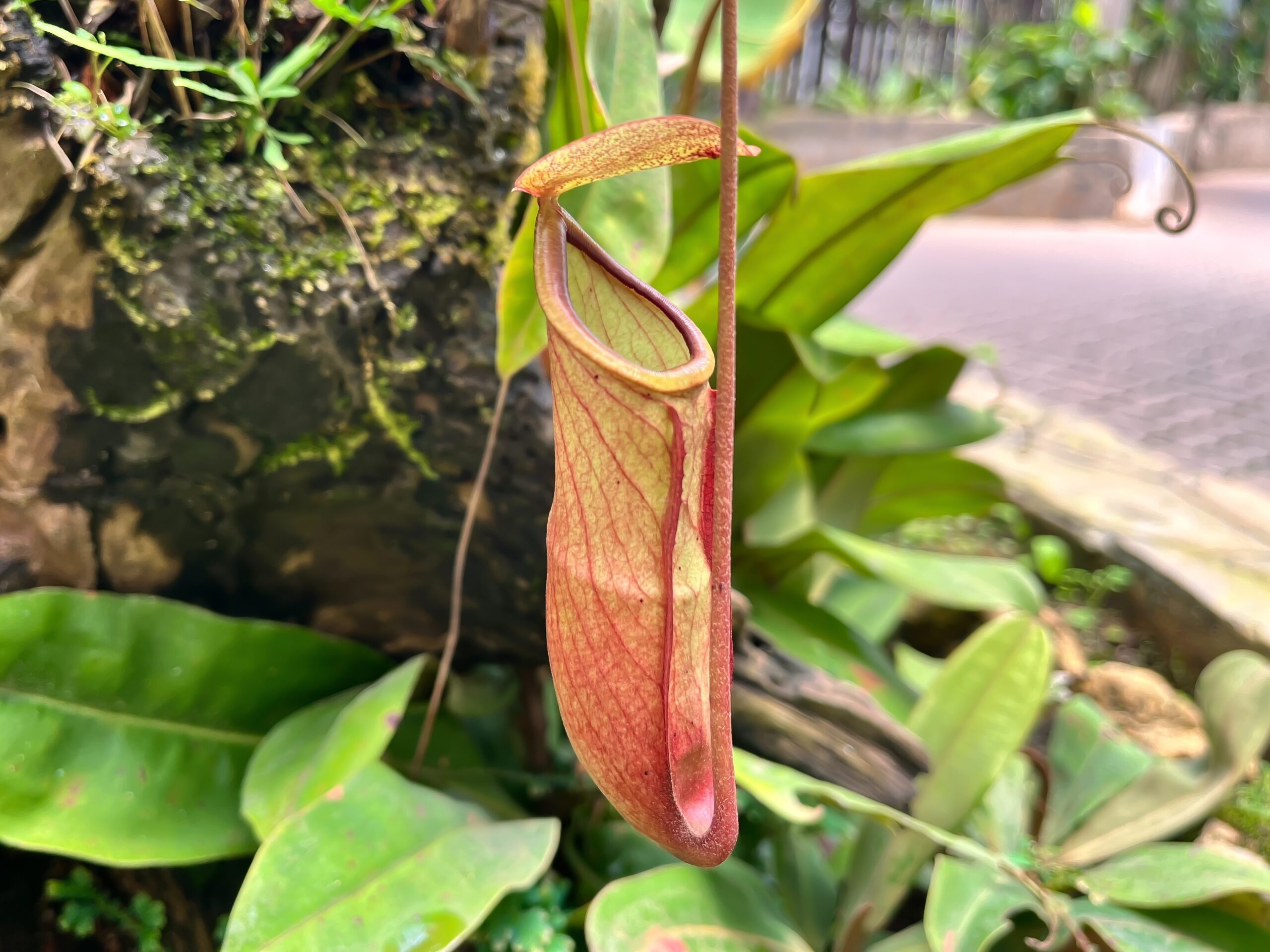
Scientists have discovered that the carnivorous pitcher plant Nepenthes khasiana uses a toxic nerve agent to incapacitate insects before digesting them.
The plant secretes a sugary nectar along the rim of its pitcher-shaped traps, attracting ants and other insects. This nectar contains isoshinanolone, a nerve toxin that disrupts the insects’ nervous systems, causing sluggish movement, muscle weakness and excessive grooming. Many victims eventually lose coordination, fall into spasms and tumble into the pitcher, where they are digested.
In addition to the toxin, the nectar includes sugars that absorb water and make the rim extremely slippery, increasing the chances that prey will slide into the trap. The combination of chemical poisoning and physical slipperiness makes the nectar both an effective lure and a lethal mechanism.
By capturing insects in this way, Nepenthes khasiana gains vital nutrients that help it survive in the nutrient-poor soils where it grows.
