

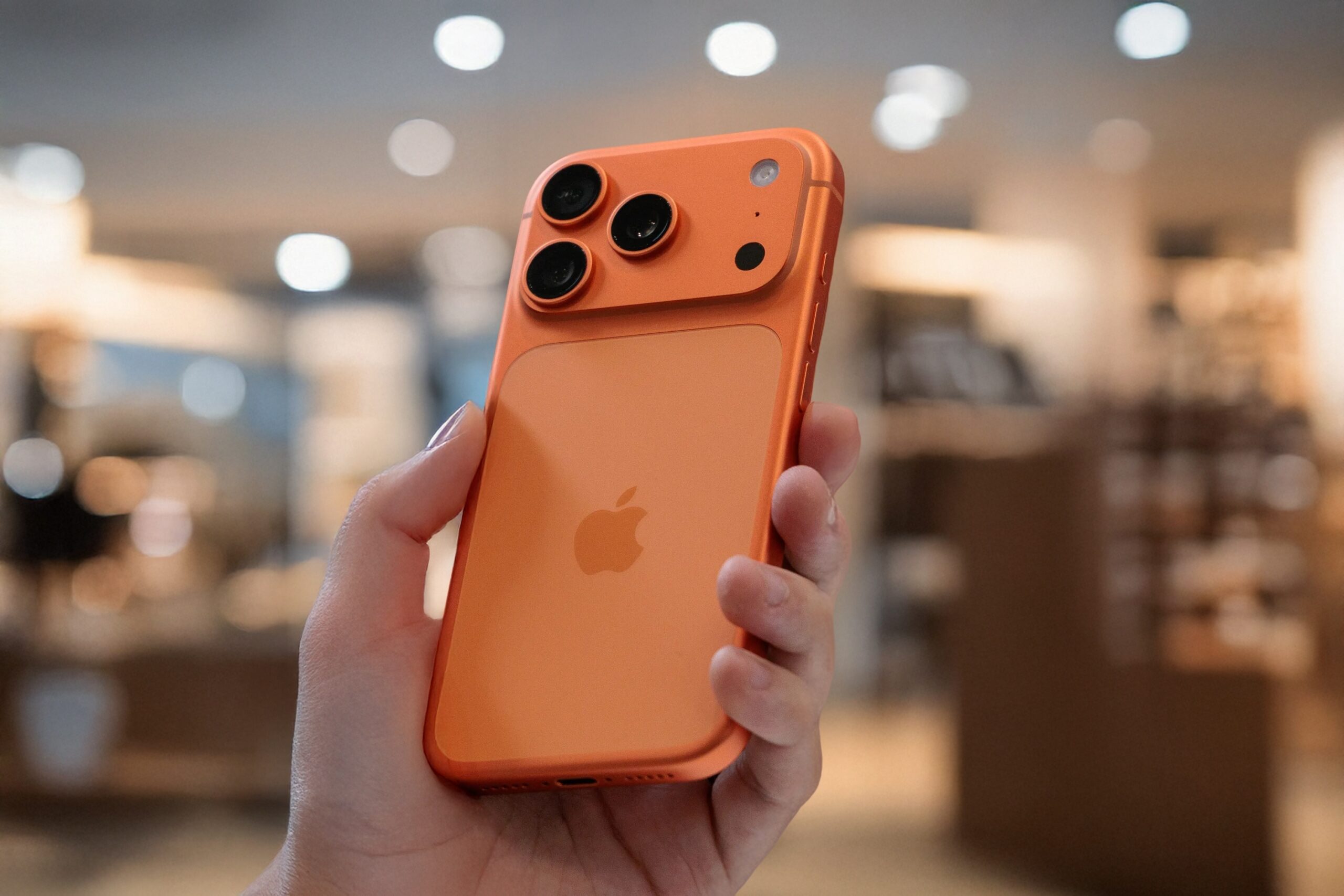
Surging iPhone demand lifted Apple’s revenue during the three months ending in September, closing its fiscal year with record profits. The company posted stronger-than-expected results despite navigating a global trade war and racing to match Big Tech rivals in artificial intelligence.
Apple credited the performance mainly to robust early sales of its iPhone 17 line-up, which launched last month. “Apple proudly reports a September-quarter revenue record of $102.5 billion, including record iPhone and Services revenue,” said CEO Tim Cook.
The iPhone surge pushed Apple’s profit to $27.5 billion (€23.8bn), almost double last year’s figure. Investors responded positively, sending Apple shares up 2% in after-hours trading.
Design Changes and Tariffs Shape Results
Although the iPhone 17 lacks advanced AI capabilities seen in Samsung and Google devices, Apple refreshed its models with sleek “liquid glass” displays and refined designs. The company held steady on pricing despite facing U.S. tariffs on products made in India and China. Those tariffs cost Apple $1.1 billion (€950m) in the past quarter and could add another $1.4 billion (€1.2bn) in the final quarter.
Consumers, especially in the United States and Europe, responded strongly. iPhone sales reached $49 billion (€42.4bn) between July and September, up 6% from a year earlier. Analysts had expected 8% growth, following a 13% jump in the previous quarter.
Ben Barringer, head of global technology research at Quilter Cheviot, noted, “Mac sales climbed 12%, iPhone sales increased 6%, but iPad and wearables stayed flat.” He added that “weakness in China hurt overall results, with sales down 4% due to forecasting issues and supply constraints.”
IDC estimated Apple sold 58.6 million iPhones worldwide in the quarter, second to Samsung’s 61.4 million Android units. For the full fiscal year ending in September, Apple reported record net income of $112 billion (€96.8bn), a 20% rise from last year.
Outlook and Investor Confidence
Tim Cook told analysts that iPhone 17 demand should stay strong, predicting higher sales for the holiday season. CFO Kevan Parekh projected at least a 10% increase in iPhone sales compared to last year’s festive quarter, with total revenue expected to rise similarly.
“Apple’s Q1 guidance of 10–12% revenue growth looks solid heading into Christmas, supported by iPhone 17 demand,” said Barringer.
Apple’s stock has surged since early indications of record iPhone sales emerged from IDC’s report. The rally pushed its market value above $4 trillion this week, with analysts expecting more gains. However, Apple remains behind in the AI race—a gap that helped Nvidia reach a $5 trillion valuation earlier this week.
The company has delivered only part of its promised AI upgrades, including delays to a revamped Siri, which now may not arrive until next year. Barringer cautioned that “with China uncertainty and faster-growing rivals like Microsoft and Nvidia, some investors might look elsewhere.”
Still, Apple has repeatedly rebounded after slow starts in emerging technologies. Analyst Dan Ives of Wedbush Securities believes deeper AI integration could eventually add $1 trillion (€860bn) to $1.5 trillion (€1.3tr) in market value, translating to $75–$100 per share.
