

Each December, people across Europe gather to mark the winter solstice, the point in the Northern Hemisphere’s year with the fewest daylight hours and the longest night. The occasion blends ancient customs with modern festivities, drawing crowds to monuments, city squares and village bonfires.
The event’s name traces back to the Latin term sōlstitium, meaning “the sun stands still”. Although the exact December date differs between countries, traditions centuries old remain widely shared: firelight, processions and communal celebrations intended to push back the darkness and welcome the returning sun.
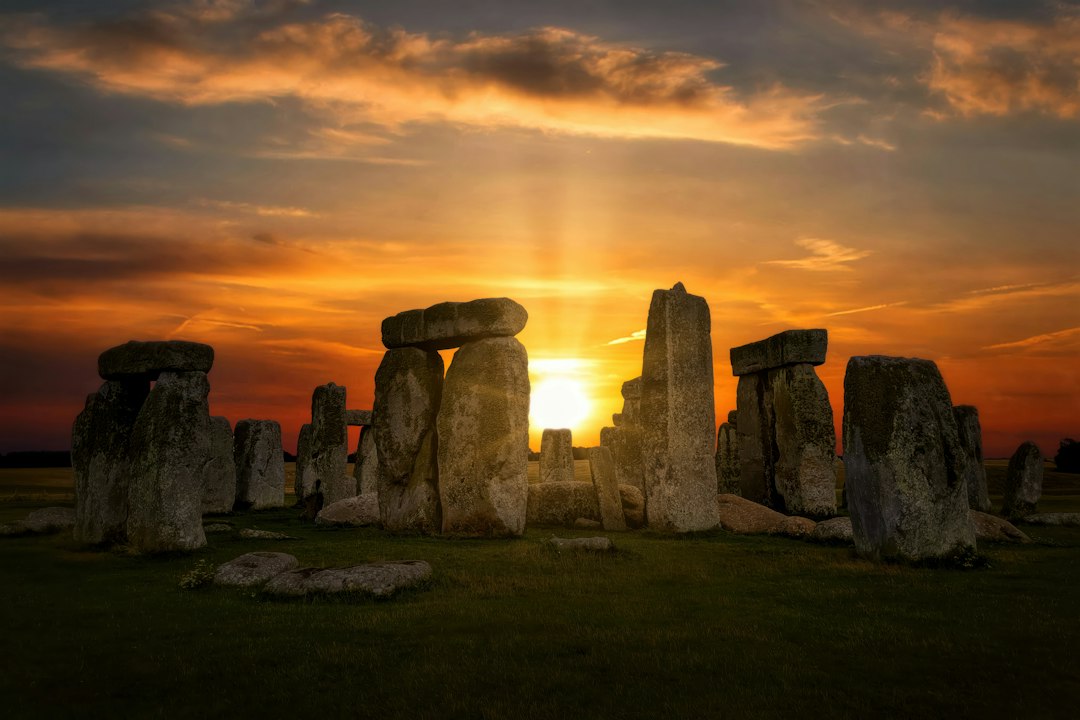
Stonehenge frames the midwinter sun
In England, Stonehenge’s Stone Circle ranks among the continent’s most famous places to experience the solstice. The 4,500-year-old monument, which dates from the Neolithic and Bronze Age, may have been deliberately constructed for the occasion, with experts noting that the stones are shaped and positioned to frame the midwinter sunset.
Archaeologists believe Neolithic communities may have held feasts and celebrations at the site during this time of year. On 22 December 2026, sunrise at Stonehenge is expected at 8:09 am, and entry will be free for the spiritualists and tourists who come to witness the year’s shortest day.
Scandinavia honours Saint Lucia
In Sweden, Finland, Denmark and Norway, St. Lucia’s Day is observed on 13 December as a way of bringing light into the darkest stretch of the year. The tradition draws on both Christian belief and older Norse folklore, honouring a martyr whose name means “light”; the date stems from the winter solstice under the medieval Julian calendar.
In Sweden, Luciatåg processions are shown on national television and staged in schools, churches and town halls, as well as in homes and offices. Participants wear white robes, and a young girl representing the saint leads the way wearing a crown and carrying a candle.
Helsinki’s crowning ceremony and parade attracts roughly 30,000 people annually, with a chosen girl leading processions through the city. In Norway, where the day is known as Lucia-dagen, people eat lussekatt, saffron-baked buns shaped like an “s”. The buns were traditionally eaten only on this day, and their yellow colour was once linked in medieval Europe with light, purity and protection from evil.
Koliada processions in Central Europe
In Czechia and Poland, solstice-time celebrations known as Koliada, or Koleda, feature parades of people costumed as goats, bulls and even evil spirits. The custom has pre-Christian origins tied to the winter solstice.
In ancient times, groups of young people called the koledari in Czechia wore costumes believed to drive off demons. They sang carols at each house they passed to cleanse it, and householders rewarded them with sweets and money in return.
Light in Ireland’s ancient tomb
In County Meath, Ireland, a kidney-shaped mount believed to have served as a religious and ceremonial centre for Neolithic people took 300 workers some 20 years to build. It stands among the oldest astronomically aligned structures in the world.
Around the solstice, a beam of sunlight enters through a roof-box and travels up to 19 metres along a passage to illuminate the inner chamber. The phenomenon occurs each year from 19 to 23 December and lasts about 17 minutes. Access is tightly restricted: a controlled lottery selects fewer than 40 people, each permitted to bring one guest.
Latvia burns the yule log
Across Latvia, the solstice on 21 December is marked by wearing masks and dragging a yule log around homes or neighbourhoods before burning it in a communal fire. The ritual is understood to symbolise casting off the hardships and misfortunes of the outgoing year while chasing evil spirits away.
In the capital, Rīga, the tradition plays out at the Town Hall in the old town, complete with singing, dancing and traditional games. The symbolic log is rolled through several streets before being set alight in a large bonfire.
Source: Euronews
