

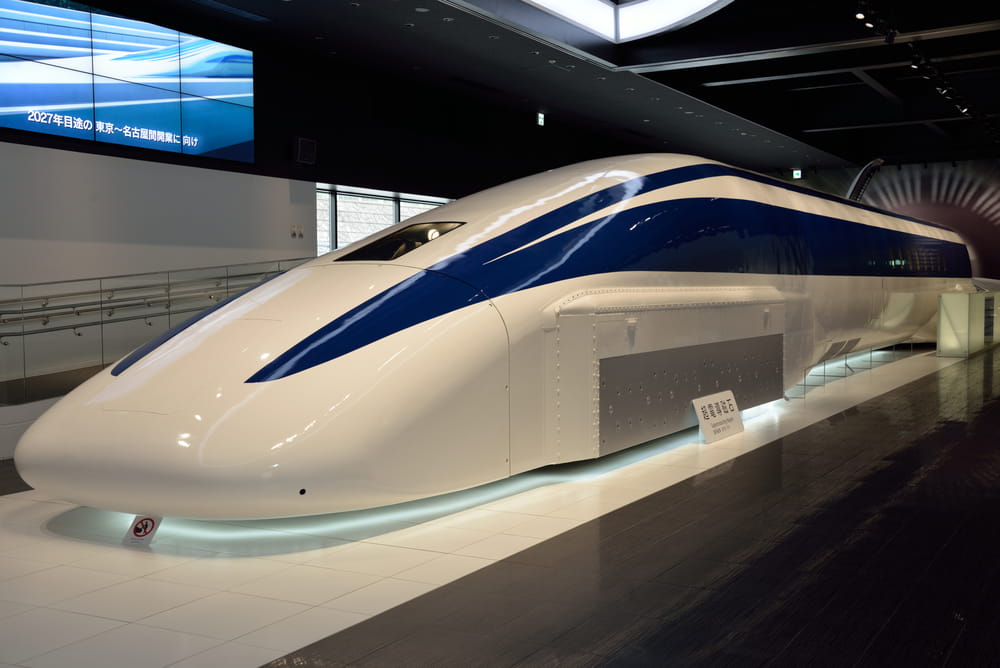
Japan is developing the L0 Series, a magnetic-levitation (maglev) train that could become the fastest in the world, reaching speeds of up to 603.5 km/h. The project is led by Central Japan Railway Company as part of the new Chūō Shinkansen line.
If fully operational, the L0 Series would cut travel time between Tokyo and Nagoya to about 40 minutes, and eventually link Tokyo, Nagoya and Osaka into a single high-speed corridor. By comparison, Europe’s fastest conventional trains — such as France’s TGV and Italy’s Italo — operate at around 300–350 km/h.
The train’s speed comes from maglev technology, which lifts carriages above the track using magnets, eliminating friction. However, the system requires entirely new infrastructure, mostly underground tunnels, and cannot run on existing rail lines. Costs have already reached about £52bn (€60bn), and the project has been delayed from its original 2027 target to around 2034–35.
Whether this technology could work in Europe is uncertain. European rail networks prioritise comfort, scenery, accessibility and capacity, and the L0 Series would be expensive, energy-intensive and lower-capacity than most European trains. Without major new, business-focused routes — such as London–Paris — the economics may be hard to justify.
For now, the world’s fastest train looks set to remain a uniquely Japanese achievement.
