

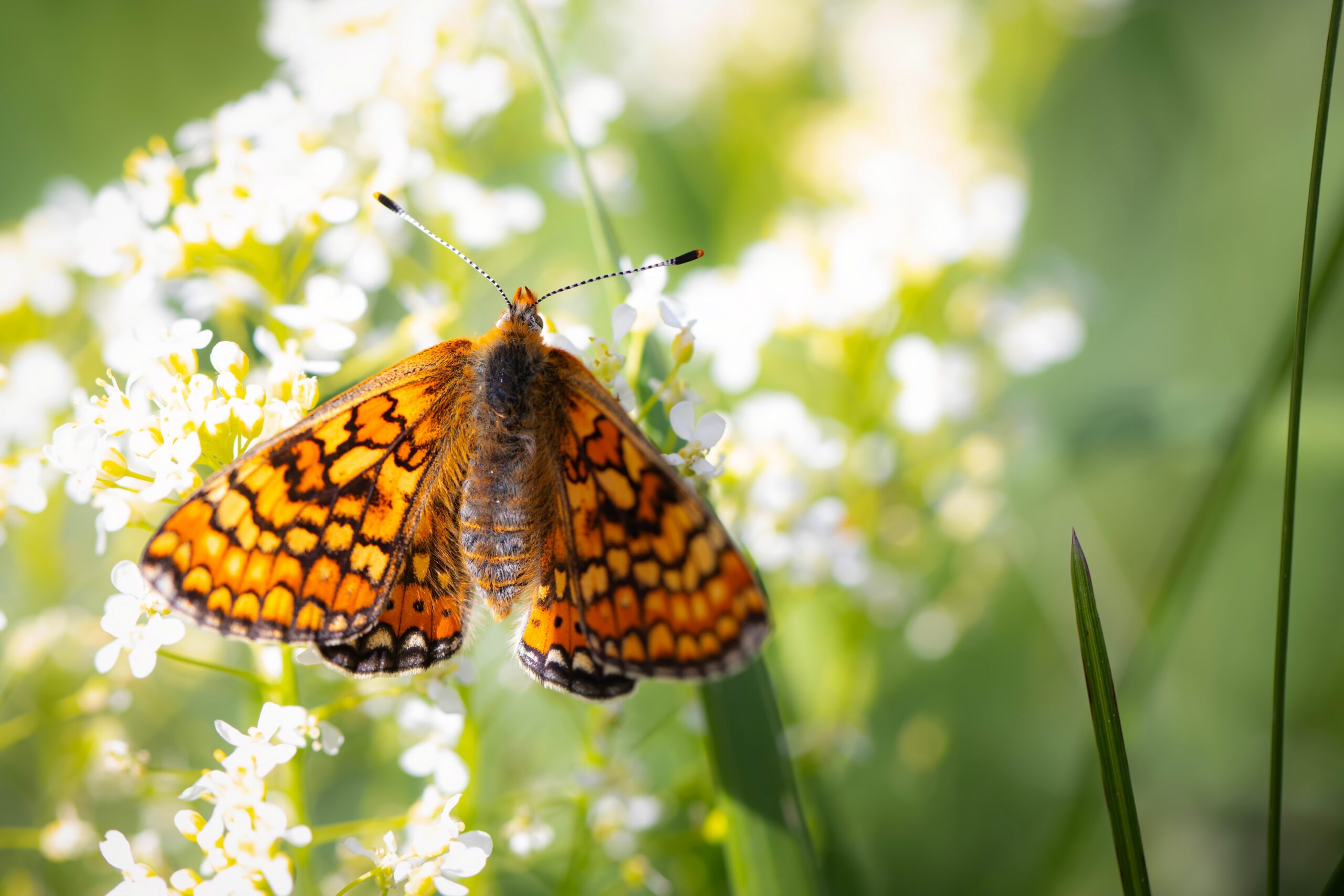
The Marsh Fritillary, once widespread across the UK and Ireland, has enjoyed a strong year in Northern Ireland thanks to favourable weather and long-term conservation work. The species has suffered steep declines over the past century as farming practices altered the grasslands and heathlands where its sole food plant, Devil’s-bit Scabious, grows.
Butterfly Conservation has spent years working closely with farmers to restore and manage suitable habitats. Their latest autumn survey of caterpillar nests — silken webs formed by groups of larvae — shows dramatic increases at several sites. One location recorded 53 nests, up from 24 last year, while another rose from 24 to 139. A third site grew from five to 27 nests.
Conservation manager Rose Cremin emphasised that while warm weather helps, it cannot reverse decades of habitat loss on its own. The key is appropriate land management, including correct grazing and maintaining the right grass height to support the food plant and allow females to lay eggs.
The Marsh Fritillary produces just one brood per year, making it especially vulnerable to environmental pressures. Although populations fell by 43% between 1985 and 2019, this year’s positive results show that targeted habitat restoration and committed collaboration with landowners can make a measurable difference.
Overall, the species’ recovery offers hope amid broader declines, with 80% of UK butterfly species decreasing in abundance or distribution since the 1970s.
